
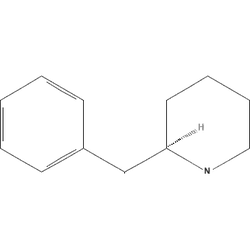
EPH Stats & Data
CCOC(=O)C(C1CCCCN1)C2=CC=CC=C2AIVSIRYZIBXTMM-UHFFFAOYSA-NInteraction Warnings
The neurotoxic effects of MDMA may be increased when combined with other stimulants.
This combination may increase strain on the heart.
History & Culture
Ethylphenidate emerged on the recreational drug market around 2010-2011 and gained increasing popularity over the subsequent years. It became primarily distributed as a research chemical through online vendors, exploiting its grey-area legal status in various jurisdictions during this period. The substance was also stocked by head shops in major cities across the United Kingdom and elsewhere, where it was sometimes sold both as a standalone product and as a component of blended preparations. One notable example was certain formulations marketed as "GoGaine," which combined ethylphenidate with other substances including MPA, lidocaine, and mannitol. An interesting aspect of ethylphenidate's pharmacological history relates to its endogenous formation within the human body. Small quantities of ethylphenidate can be produced through hepatic transesterification when ethanol and methylphenidate are co-ingested. This metabolic pathway parallels the formation of cocaethylene when cocaine and alcohol are consumed together. However, only a small percentage of consumed methylphenidate undergoes this conversion, meaning pharmacologically significant concentrations with measurable physiological effects would not typically be produced through this mechanism under normal circumstances. The phenomenon is most likely to occur in scenarios involving large quantities of both substances, such as in cases of non-medical use or overdose.
Subjective Effects
Physical
The physical effects of ethylphenidate can be broken down into several components which progressively intensify proportional to dosage.
- Stimulation: In terms of its effects on the physical energy levels of the user, ethylphenidate is usually considered to be energetic and stimulating in a fashion that is distinct but much weaker than that of amphetamine or methamphetamine and stronger than that of modafinil and caffeine. At lower to moderate doses, it encourages general productivity, but at higher dosages, it encourages physical activities such as dancing, socializing, running, or cleaning. The particular style of stimulation which ethylphenidate presents can be described as forced. This means that at higher dosages, it becomes difficult or impossible to keep still as jaw clenching, involuntarily bodily shakes and vibrations become present, resulting in extreme shaking of the entire body, unsteadiness of the hands, and a general lack of motor control.
- Dehydration
- Appetite suppression
- Vasoconstriction: Norepinephrine reuptake inhibition causes the sympathetic nervous system to constrict vessels and puts severe strain on the cardiovascular system with prolonged use.
- Increased heart rate
Cognitive
The cognitive effects of ethylphenidate can be broken down into several components which progressively intensify proportional to dosage. The general head space of ethylphenidate is described by many as one of extreme mental stimulation, increased focus, and powerful euphoria. It contains a large number of typical stimulant cognitive effects. Although negative side effects are usually mild at low to moderate dosages, they become increasingly likely to manifest themselves with higher amounts or extended usage. This particularly holds true during the offset of the experience.
- Thought acceleration
- Analysis enhancement
- Wakefulness
- Focus enhancement: This component is most effective at low to moderate dosages as anything higher will usually impair concentration.
- Empathy, love and sociability enhancement: These feelings of sociability, love and empathy are much stronger than that of methylphenidate. They are a little weaker and less sharp than those found on substances such as MDMA but still prove stronger and more consistent than many other stimulants of this class. This is capable of providing long-lasting therapeutic effects.
- Motivation enhancement
- Euphoria: The euphoric rush associated with ethylphenidate use, as result of dopamine reuptake inhibition, is very short-lived and compulsive, similarly to that of cocaine.
- Cognitive fatigue: This component can occur during the offset of this compound as a rebound effect which is usually equal in its intensity to the enhancements which occurred before it.
Forked from Subjective Effect Documentation by Josie Kins, September 2015. Via dose.wiki (CC0).
Toxicity
PsychonautWikiThe toxicity and long-term health effects of recreational ethylphenidate use do not seem to have been studied in any scientific context and the exact toxic dosage is unknown. This is because ethylphenidate has a very limited history of human usage. Anecdotal evidence from people who have tried ethylphenidate within the community suggests that there do not seem to be any negative health effects attributed to simply trying this substance at low to moderate doses by itself and using it sparingly (but nothing can be completely guaranteed). It is worth noting that ethylphenidate crystals are particularly abrasive and somewhat caustic to mucous membranes.
Effect Profile
Curated + 32 ReportsStrong stimulation, euphoria, focus, and anxiety/jitters
Tolerance & Pharmacokinetics
drugs.wikiTolerance Decay
Acute tolerance: develops within a single session — the reset numbers above apply after sustained heavy use, not after one binge. Within-session tachyphylaxis usually resets largely overnight.
Experience Report Analysis
ErowidDemographics
Gender Distribution
Age Distribution
Reports Over Time
Effect Analysis
ErowidEffects aggregated from 32 experience reports (32 single-substance Erowid)
Effect Sentiment Distribution
Confidence Distribution
Each bar is the share of reports mentioning the effect; its whisker, and the band on the rows below, is the 95% interval: where the share could plausibly be with other reports of the same kind.
Positive Effects 6
Adverse Effects 9
Dose-Response Correlation
How effect frequency changes across dose levels. Whiskers, and the numbers' hover text, give each figure's 95% interval.
Not drawn, too few reports (a dose tier needs 20): Insufflated Threshold (n=11). Why 20?
Dosage Distribution
Dose distribution from experience reports, one dose per report (the first listed). Values above Q3 + 3×IQR are left out as outliers.
Real-World Dose Distribution
62K DosesFrom 113 individual dose entries. Values above Q3 + 3×IQR are left out as outliers.
Oral (n=31)
Rectal (n=10)
Insufflated (n=55)
Common Combinations
Most co-occurring substances, as a share of all 51 reports filed under EPH; whiskers are 95% intervals
Form / Preparation
Most common forms and preparations, as a share of the 46 reports that give one; whiskers are 95% intervals
Body-Weight Dosing
Dose per kg of body weight, one dose per report (the first listed), from reports giving a weight of 30–250 kg. Values above Q3 + 3×IQR are left out as outliers.
Insufflated
Oral
Redose Patterns
Redosing behavior across 49 reports
Legal Status
| Country | Status | Notes |
|---|---|---|
| Australia | Controlled (analogue provisions) | Australian state and federal legislation contains provisions covering analogues of controlled drugs. Ethylphenidate falls under these provisions as an analogue of methylphenidate. |
| Austria | Illegal (NPSG) | Prohibited since January 1, 2012 under the Neue-Psychoaktive-Substanzen-Gesetz (New Psychoactive Substances Act). |
| Canada | Schedule III (CDSA) | Listed on the Controlled Drugs and Substances Act in Schedule III as of May 5, 2017. Previously unscheduled with no analog law covering it. |
| Denmark | Illegal | Controlled substance as of February 1, 2013. |
| Germany | Anlage II BtMG | Controlled under Anlage II of the Betäubungsmittelgesetz (Narcotics Act) as of July 17, 2013. Manufacturing, possession, import, export, purchase, sale, procurement, and dispensing without a license is prohibited. |
| Jersey | Illegal | Controlled under the Misuse of Drugs (Jersey) Law 1978. |
| Netherlands | Lijst I (Opiumwet) | Listed in Lijst I of the Opiumwet (Opium Act) as of April 27, 2018. |
| Norway | Unscheduled | Not specifically listed as controlled under the Forskrift om narkotika (narcotics regulation). Despite structural similarity to methylphenidate, Norwegian law does not automatically control ethylphenidate as an analogue. |
| Sweden | Illegal (Appendix 1) | Listed in Appendix 1 of Swedish drug control regulations as of December 15, 2012, making it illegal for most purposes. |
| Switzerland | Controlled (Verzeichnis D) | Specifically named as a controlled substance under Verzeichnis D of Swiss drug regulations. |
| United Kingdom | Class B | Initially placed under emergency control as a Temporary Class Drug in April 2015 along with other phenidates, restricting sale and manufacture. Subsequently classified as a Class B drug on May 31, 2017, making possession, production, and supply illegal. |
| United States | Unscheduled (federally) | Not explicitly scheduled at the federal level. However, as a structural analogue of methylphenidate (Schedule II), it could potentially be prosecuted under the Federal Analogue Act if sold for human consumption or possessed with intent to ingest. Specifically controlled in Utah along with its analogues, homologs, and synthetic equivalents. |